AMLETO
Automated Forensic Voice Comparison Software
Advanced speaker recognition technology powered by ECAPA-TDNN, Likelihood Ratio analysis, and a transparent, scientifically verifiable methodology.
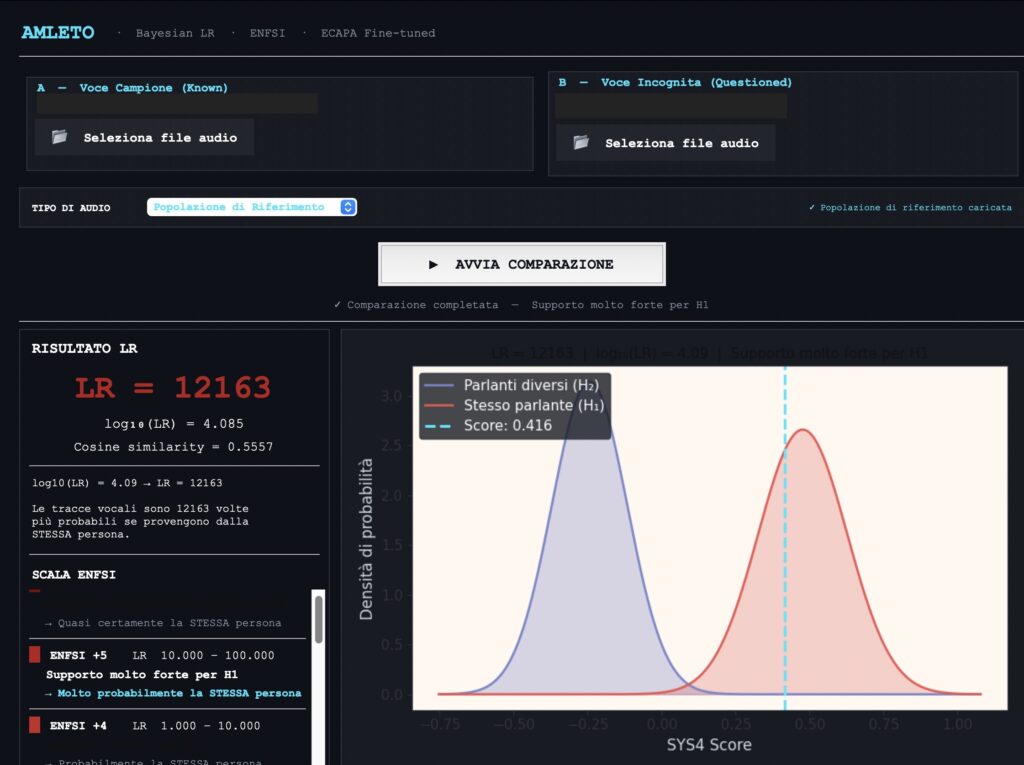
AMLETO is a fully automated forensic voice comparison system designed to analyze and compare speech recordings using advanced speaker recognition technology.
The system integrates automatic extraction of biometric speaker characteristics, similarity scoring, and statistical evaluation through the Likelihood Ratio (LR) framework.
From audio recordings to forensic results: every stage of the comparison process is documented and verifiable.
What is AMLETO?
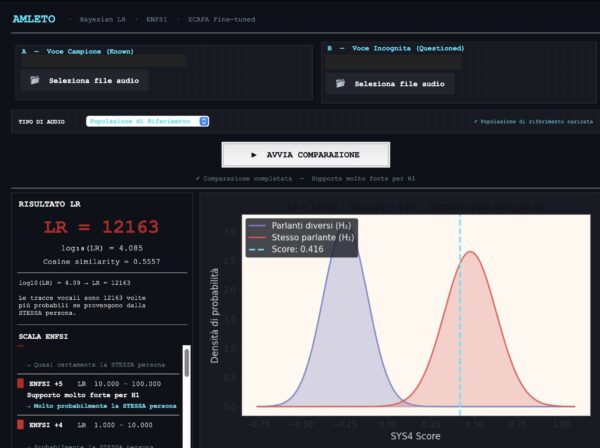
AMLETO is a professional automated forensic speaker comparison software system developed by Marco Perino with scientific support from engineer Sonia Cenceschi.
The system integrates three key components:
Neural Speaker Recognition
AMLETO uses an ECAPA-TDNN neural architecture to extract 192-dimensional biometric speaker representations (speaker embeddings) from speech recordings.
Statistical Evaluation of Voice Evidence
The system evaluates comparison results using a numerical Likelihood Ratio, expressing the strength of voice evidence under two competing speaker hypotheses.
Forensic Interpretation of Results
The numerical Likelihood Ratio is complemented by a 13-level verbal interpretation scale based on the ENFSI framework adopted by the system.
How AMLETO Works
1. Audio Acquisition and Preparation
Speech recordings are decoded and prepared for biometric analysis through automated, traceable processing procedures.
2. Speaker Embedding Extraction
The ECAPA-TDNN neural network extracts speaker-related characteristics and generates 192-dimensional biometric representations known as speaker embeddings.
3. Similarity Scoring and Score Normalization
The system compares speaker embeddings and normalizes similarity scores using a defined reference population.
4. Statistical Calibration and Likelihood Ratio
Comparison scores are statistically calibrated to produce a Likelihood Ratio (LR), quantifying the strength of voice evidence under the same-speaker and different-speaker hypotheses.
5. Forensic Interpretation
The result is reported as a numerical Likelihood Ratio together with a 13-level verbal interpretation scale, following the adopted ENFSI framework.
Multilingual Adaptability and Population-Based Calibration
A Flexible Approach to Forensic Speaker Comparison Across Languages
AMLETO is designed to support forensic speaker comparison across different languages through the use of appropriate reference population datasets and language-specific statistical calibration.
The system’s ECAPA-TDNN architecture enables the extraction of speaker embeddings from speech recordings, while its statistical framework can be adapted to the linguistic and demographic characteristics of the target population.
By selecting a representative reference population, calibrating the Likelihood Ratio model, and conducting appropriate validation tests, AMLETO can be evaluated for forensic speaker comparison in different languages and operational contexts.
This adaptable approach allows forensic laboratories and research institutions to investigate the system’s performance on language-specific datasets under documented and reproducible experimental conditions.
Language-specific calibration and validation are essential to establishing the reliability of the resulting forensic evidence.
Methodological Transparency and Reproducibility
Forensic Results Must Be Open to Scientific Scrutiny
AMLETO follows an open-methodology approach focused on documenting speaker comparison procedures and enabling independent examination of results.
The system provides information on processing stages, similarity scores, statistical parameters, and the mathematical procedures used to calculate the Likelihood Ratio.
This documentation allows independent experts to examine and reconstruct the statistical calculations, subject to the availability of the relevant data and parameters.
Transparency, traceability, and reproducibility are central principles of AMLETO’s forensic methodology.
AMLETO Limitations and Conditions of Use
A Likelihood Ratio Is Not a Probability of Identity
AMLETO evaluates the strength of voice evidence under competing hypotheses. It does not automatically establish a person’s identity.
The Software Does Not Replace the Forensic Expert
Assessing recording suitability, case-specific conditions, and the evidential significance of the results requires specialist forensic expertise.
Recording Conditions Affect Speaker Comparison
Speech duration, background noise, audio compression, transmission channels, language, and speaker characteristics must be considered when assessing the applicability and reliability of the comparison.
AMLETO at the Italian National Observatory for Digital Forensics (ONIF)
Scientific Presentation — Genoa, October 16, 2026
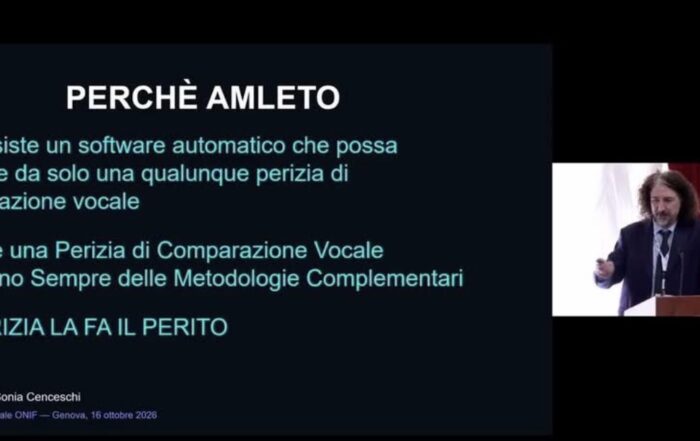
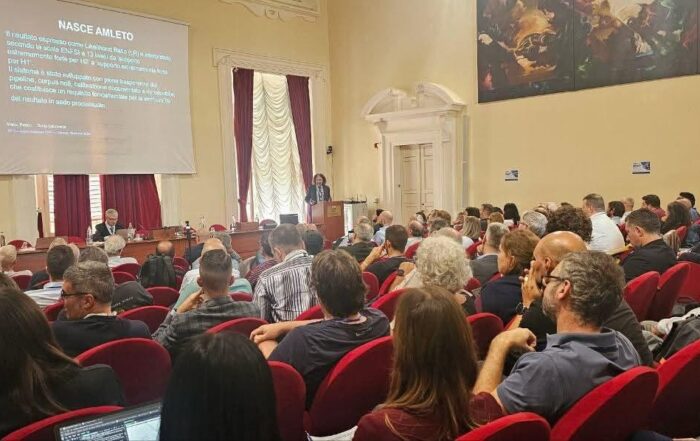
AMLETO was presented within the scientific programme of the ONIF 2026 event in Genoa, highlighting its automated forensic speaker comparison methodology, statistical evaluation framework, and commitment to transparent, verifiable results.
Event details.

AMLETO and the Role of the Forensic Audio Expert
AMLETO is designed to support forensic phoneticians, expert witnesses, forensic audio analysts, and specialized laboratories in the comparison of speech recordings.
The interpretation of the Likelihood Ratio, assessment of case-specific conditions, and formulation of expert conclusions remain the responsibility of the forensic practitioner.
Per la tua privacy YouTube necessita di una tua approvazione prima di essere caricato.
Independent Scientific Validation and Benchmarking
AMLETO is available for independent validation studies, blind testing, and comparative performance evaluations against other forensic speaker comparison systems.
Prosuono welcomes collaboration with universities, forensic laboratories, law enforcement institutions, and scientific researchers to promote objective, documented, and reproducible evaluations of system performance.
Such evaluations may include discrimination performance, Likelihood Ratio calibration, robustness under realistic recording conditions, and reproducibility of forensic results.